
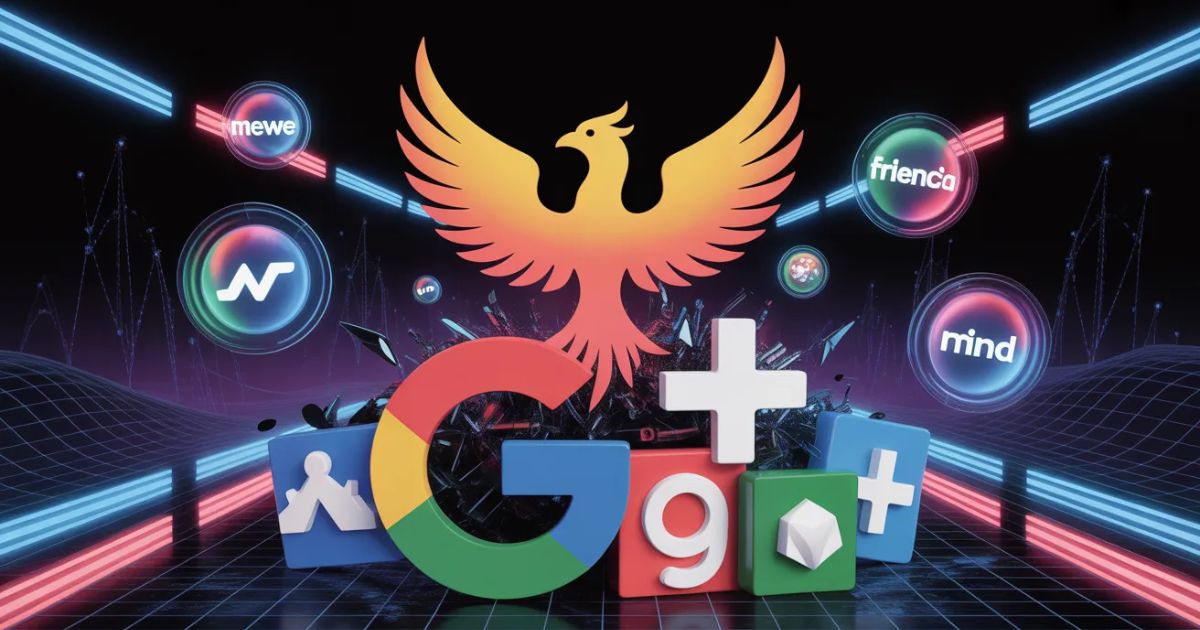
Remember those digital halls from the early 2010s? Google+ wasn’t just another platform it was different. Now, whispers of its resurrection are echoing through tech forums. The “unbanned G+” movement is real.
Let me take you inside this phenomenon.
The Rise and Fall of G+
Google launched G+ in 2011 with ambition. They wanted total web unification. The platform introduced Circles, letting you organize contacts meaningfully. Hangouts revolutionized video chat before Zoom existed. Communities tools built around shared interests, not vanity metrics.
But problems emerged quickly.
Forced integration with Gmail frustrated users deeply. Engagement stayed low compared to Facebook. The 2018 data breach affected 50 million accounts. Mobile optimization? Practically nonexistent during smartphone dominance.
April 2019 marked the official shutdown. Yet its legacy merely entered digital hibernation.
The Meaning Behind “Unbanned G+”
What exactly does unbanned G+ represent today? Three distinct interpretations have emerged organically.
Revival by Niche Communities
Privacy-focused enthusiasts are rebuilding G+ independently. They’re using decentralized platforms and custom frameworks:
- Mastodon forks with authentic G+ layouts
- Hubzilla and Diaspora integrations for seamless operation
- Custom APIs replicating Circles and Streams precisely
Google doesn’t run these initiatives. Passionate users do and they’re gaining traction.
Corporate Re-Evaluation
Alphabet insiders suggest something intriguing is happening. Internal discussions have mentioned “unbanned G+” explicitly. The company might repurpose G+ technologies soon. Collaboration tools and digital identity platforms seem likely.
These aren’t just rumors anymore either.
Underground Access to Archived Networks
Certain forums claim original G+ data survived. Developer APIs and archived backups enable reconstruction. Some enthusiasts now access read-only versions successfully. Third-party scripts even allow new discussions.
It’s partial, but it exists genuinely.
Why People Still Want G+ Back
This isn’t mere nostalgia driving demand here. G+ delivered features competitors still haven’t matched.
Community-centric design prioritized meaningful curation over friend counts. Circles gave unprecedented privacy control. Intelligent threaded discussions fostered deep conversations naturally. No algorithm manipulation existed chronological timelines ruled.
Multimedia integration felt seamless across photos and polls. The interface encouraged collaborative interaction without noise.
These architectural choices created spaces feeling intimate. Yet they remained expansive and exploratory simultaneously.
| G+ Feature | Modern Equivalent | What’s Missing |
|---|---|---|
| Circles | Twitter Lists | Actual privacy control |
| Communities | Facebook Groups | Algorithm-free feeds |
| Hangouts | Zoom/Meet | Spontaneous integration |
| Streams | User-controlled chronology |
Modern Platforms Inspired by G+
The digital legend lives through spiritual successors. Several platforms carry G+’s ideological DNA forward.
MeWe focuses on privacy and ad-free interaction. Their community structure mirrors G+ principles closely. Friendica offers decentralized networking with customizable Circles. Minds promotes free speech through threaded discussions.
Lemmy functions like Reddit but federated. Its topic-based communities echo G+ Communities exactly.
These platforms consciously continue what G+ started. They’re breathing life into the unbanned G+ movement actively.
Key Platform Comparisons
- MeWe: Privacy-first with familiar Circle-like organization
- Friendica: True federated communities with cross-platform integration
- Minds: Blockchain-based rewards for thoughtful dialogue
- Lemmy: Reddit meets decentralized social media
A New Digital Underground
Here’s where things get fascinating entirely.
As mainstream platforms embrace surveillance and manipulation, users seek authentic interaction refuges. Former G+ communities migrated to encrypted messaging apps like Matrix and Element.
Others rebuilt networks using Jekyll and Hugo. These static site generators plus ActivityPub plugins recreate G+ structures independently. It’s not platform restoration it’s preserving community-centric design philosophy.
The digital counterculture values curiosity over virality. Intention trumps noise in these spaces.
“We’re not trying to clone Google+. We’re rescuing an idea: that social media can be thoughtful, organized, and user-controlled.” A Hubzilla developer
Challenges in the Path of Rebirth
Unbanned G+ faces real obstacles despite enthusiasm.
Intellectual property protections make direct cloning risky. Google owns the original designs legally. Data privacy concerns complicate any account revival attempts. Original data agreements must be respected absolutely.
Platform fragmentation threatens the movement’s cohesion. Without central coordination, alternatives risk becoming isolated. Modern users demand seamless mobile interfaces too. Dark modes, rapid updates, smooth integration expectations evolved.
The original G+ underdelivered on these fronts.
Major Hurdles to Overcome
- Legal barriers: Navigating Google’s IP landscape
- Technical debt: Building modern mobile experiences
- Community consensus: Avoiding fragmentation across decentralized platforms
- Resource limitations: Funding independent development sustainably
Read More: Как внутренний настрой оказывает воздействие на интерпретацию достижения
The Future of Unbanned G+
Whether through underground archives or federated social networks, unbanned G+ represents genuine movement.
What might future iterations actually deliver?
Fully decentralized architecture eliminates single ownership concerns. Communities form, moderate, and evolve independently. Modular identity control lets users maintain multiple personas. Professional, personal, anonymous all seamlessly switchable.
Feeds stay chronological by default. No manipulation whatsoever occurs here. Content blends long-form and short-form naturally. Blogging meets microblogging meets forum discussions.
Data portability becomes absolute standard practice. Encryption and deletion happen on demand.
These principles aren’t theoretical fantasies at all. Developers inspired by G+ resurrection build them today.
Conclusion: Unbanned G+ Is a Manifesto
Speaking of unbanned G+ means declaring belief. The internet can still be communal. It can remain curious and genuinely kind.
This isn’t about reviving one platform only. It’s about restoring culture where digital communities prioritize shared passions over passive consumption.
Whether you used G+ religiously or discover it now, the message resonates clearly. The dream survives in new forms.
As the movement grows, “unbanned G+” symbolizes more than revival. It marks digital rebellion. A restoration of values. A definitive return to thoughtful online interaction.
The phoenix has risen from those digital halls. And this time, nobody controls the resurrection.
Ready to join the movement? Explore MeWe, Friendica, or Minds today. Experience user-controlled social media firsthand. The future of online communities is being written now.